
When Vampires Become Biological Weapons: Rewriting the Myth as a Gothic Thriller
For centuries, vampires have occupied a strange space in our cultural imagination. Once symbols of disease, fear, and predation, they have gradually softened into romantic figures—immortal lovers, tragic antiheroes, and supernatural metaphors for longing.
But the original vampire myth was never meant to be comforting.
It was a warning.
In NAMTAR: The Night Plague, I set out to strip the vampire back to its most unsettling core and ask a different question:
What if vampires were never supernatural at all?
What if they were engineered?
From Folklore to Biology
The earliest vampire legends weren’t about seduction. They were about contagion. About bodies changing. About communities collapsing under something they didn’t understand.
That concept felt far more relevant than romance.
Instead of fangs and curses, I imagined genetic corruption.
Instead of immortality, weaponized evolution.
Instead of magic, ancient science so advanced it was mistaken for myth.
The result became the Namtar—crystalline predators designed to convert human biology into something faster, stronger, and utterly inhuman. Not monsters born of the night, but a plague built with intent.
This shift—from supernatural to biological—moves the story firmly into the realm of gothic thriller, where atmosphere and dread coexist with science, consequence, and moral choice.
Why Gothic, Not Romantic
Gothic fiction has always been about boundaries:
* between life and death
* between knowledge and hubris
* between salvation and damnation
The world of Namtar is gothic not because it is ancient or dark, but because it asks uncomfortable questions and refuses easy answers.
What happens when evolution is no longer natural?
What happens when survival requires sacrifice?
And what happens when the same bloodline creates both the cure and the disease?
There is no romance in that. Only consequence.
The Hand on the Cover
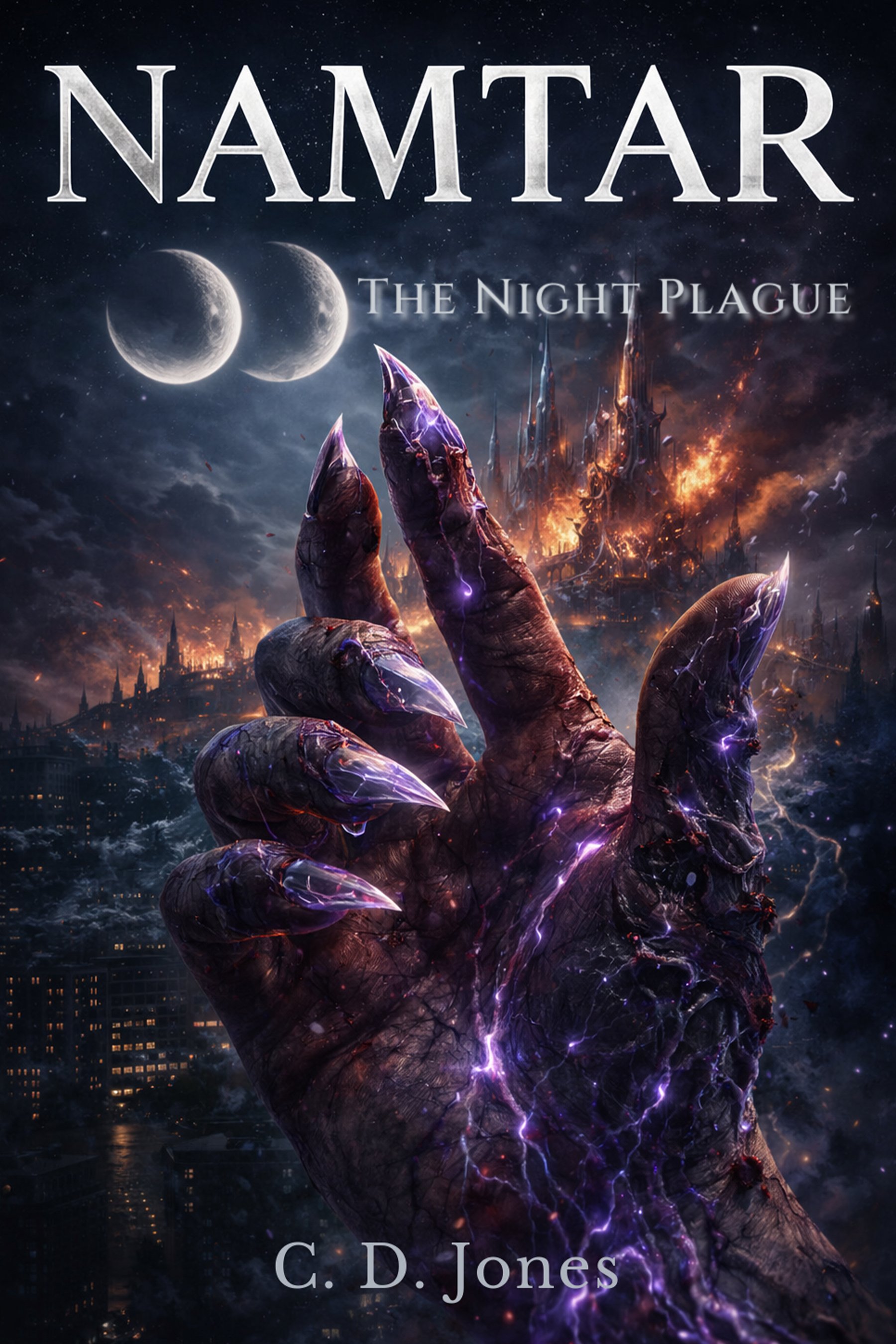
The new cover for NAMTAR: The Night Plague captures the heart of the story better than any synopsis ever could.
A human hand—familiar, vulnerable—overtaken by crystalline growth.
It represents the central tension of the series:
Humanity versus transformation
Control versus corruption
Choice versus inevitability
The Namtar are not immortal lovers lurking in shadows.
They are what happens when science outpaces morality.
And the horror lies not in what they are—but in what we were willing to create.
A Story for Adult Readers
Namtar is written for readers who want more than comfort from their fiction.
It is for those who enjoy:
Adult gothic thrillers
Biological horror grounded in plausible science
Technothrillers with apocalyptic stakes
Mythology reinterpreted, not romanticized
If you’re drawn to stories like The Passage, The Strain, or World War Z—where dread comes from inevitability, not jump scares—this series was written with you in mind.
What Comes Next
This blog will continue to explore:
The science and mythology behind the Namtar
The moral questions at the heart of the series
The hidden history woven into the Atlantean Legacy
And the choices that shape who survives when extinction looms
Because in the world of Namtar, monsters aren’t born.
They’re designed.
In Umbra, Lucis.
In shadow, light.
— C. D. Jones
Namtar - The Night Plague
New Cover!